“Cockroach Janta Party” Emerges as a Massive Digital Youth Movement, Crosses 5 Lakh Supporters Online
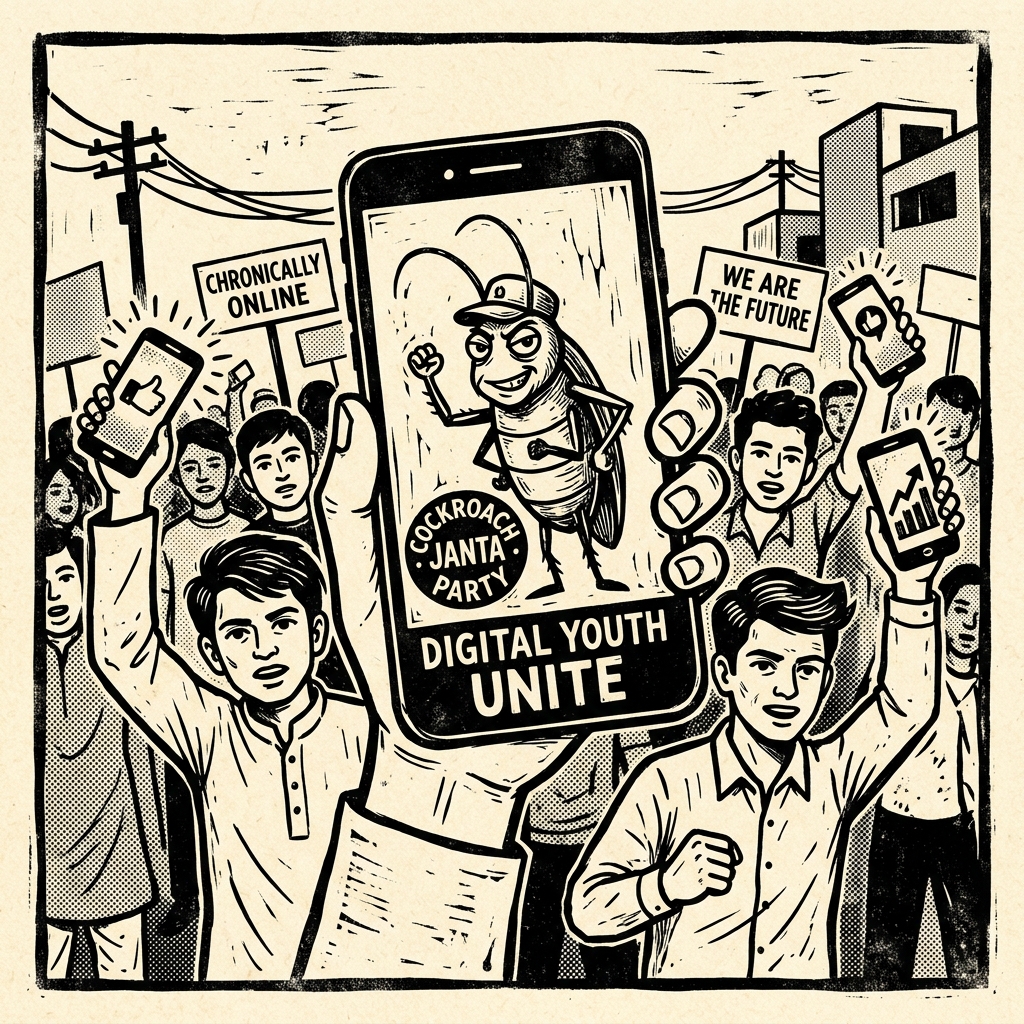
India’s internet culture has witnessed the sudden rise of a new and unconventional political movement — the “Cockroach Janta Party” (CJP). What initially began as an online satirical response has now evolved into one of the country’s fastest-growing youth-driven digital communities, attracting massive attention across Instagram, X (formerly Twitter), and other social platforms.
According to party volunteers and online membership organizers, more than 5 lakh people have already joined or interacted with the movement within a very short period of time. The party’s social media pages have witnessed explosive growth, with lakhs of followers engaging daily through memes, campaigns, discussions, and digital protests.
## A Movement Born From Internet Frustration
Cockroach Janta Party was created as a response to growing frustration among India’s youth regarding unemployment, lack of opportunities, political disconnect, and the feeling of being ignored by existing systems. Instead of following the traditional style of politics, the movement embraced internet culture, satire, humor, and meme-driven communication to connect with young people online.
The name “Cockroach Janta Party” itself became symbolic for many users who felt mocked, underestimated, or dismissed by institutions and mainstream narratives. Rather than rejecting the label, supporters turned it into a digital identity of resistance and unity.
Party supporters describe the movement as:
> “A voice for the unemployed, overworked, underpaid, and chronically online generation.”
## Massive Growth Across Social Media
The movement witnessed explosive traction on Instagram and X, where viral posts, parody campaign videos, manifesto graphics, and meme content started circulating rapidly among young users.
Within days:
- Online membership forms began receiving thousands of responses - Supporter-generated content flooded social media - Party hashtags started trending nationally - Digital creators and meme pages amplified the campaign - Students and unemployed youth became major participants
Several viral slogans further helped the movement spread online, including:
- “Voice of the Unemployed” - “Lazy but Alive” - “Digital Rebellion” - “Rejected by the System, Accepted by the Internet”
Supporters say the humor-based approach helped the movement resonate deeply with young internet users who often feel disconnected from conventional political messaging.
## Why Young People Are Relating To It
Unlike traditional organizations, Cockroach Janta Party communicates entirely in the language of internet culture. Instead of long political speeches, the movement uses memes, sarcasm, reels, reaction posts, and relatable content to discuss real issues affecting young people.
Topics frequently highlighted by supporters include:
- unemployment - exam pressure - job market struggles - online censorship - mental exhaustion - political hypocrisy - media narratives - youth representation
Many supporters believe that the movement represents a generation that has grown up online and prefers open, direct, and relatable communication rather than formal political messaging.
## Mahua Moitra And Other Political Reactions
The movement gained nationwide attention after several political personalities publicly reacted to it online. Among the most discussed interactions was that of Mahua Moitra, whose social media engagement with the movement triggered widespread discussions across platforms.
Soon after, senior political figures and internet creators also began acknowledging the trend, further boosting its visibility. Screenshots, memes, and reactions connected to these interactions spread rapidly across Indian social media.
This crossover between meme culture and mainstream politics became one of the biggest reasons behind the party’s sudden national visibility.
## A New Form Of Internet-Era Political Culture
While Cockroach Janta Party is currently operating as a digital movement and not as a registered electoral political party, supporters argue that its impact goes beyond satire.
According to members associated with the campaign, CJP represents:
- digital democracy - youth participation - freedom of expression - transparency - accountability - internet-powered public discourse
The movement’s organizers claim that traditional systems have repeatedly ignored younger generations, and internet platforms are now becoming the new space for political expression and collective identity.
A spokesperson associated with the movement said:
> “This is not just about jokes or memes. Behind every meme is a real frustration, a real struggle, and a real person trying to be heard.”
## The Role Of Meme Culture In Politics
Experts and internet observers believe the rapid rise of Cockroach Janta Party highlights how meme culture is increasingly influencing public conversations in India.
Instead of relying on conventional campaigns, posters, or rallies, CJP built its popularity through:
- viral reels - shareable meme templates - interactive posts - internet humor - community participation - organic user-generated content
This decentralized online participation helped thousands of people feel directly involved in shaping the movement.
Many internet users have described Cockroach Janta Party as:
> “A protest movement disguised as a meme.”
## What Happens Next?
As online membership numbers continue to rise, party supporters claim the movement is only getting started. Organizers are reportedly planning:
- larger digital campaigns - interactive online events - youth-focused discussions - creator collaborations - internet-led awareness initiatives
Whether the movement eventually enters mainstream politics or remains a powerful digital youth platform, one thing is clear — Cockroach Janta Party has already become one of the most talked-about internet phenomena in India.
What started as a viral online joke has now transformed into a nationwide digital conversation about youth identity, frustration, humor, and political expression in the internet age.
Key Facts & Background
- More than 5 lakh people have already joined or interacted with the movement.
- The party communicates entirely in the language of internet culture, using memes, sarcasm, reels, and relatable content.
- Slogans like 'Voice of the Unemployed' and 'Lazy but Alive' have gone viral.

About the Author: CJP Correspondent
CJP Correspondent covers national campaigns, youth resistance movements, and digital grassroots campaigns.
Discussions & Opinions (2)Moderated Board
This is exactly what our generation needed. Finally, someone speaking our language!
A protest disguised as a meme. Brilliant strategy to get the message across.